A sewage backup is one of the most serious emergencies a homeowner can face. Unlike a clean-water leak, sewage — known in the restoration industry as Category 3 or "black water" — contains bacteria, viruses, and parasites that can cause illness on contact. If your Freeport home has a sewage backup, the priority is protecting your family, not saving belongings. All Clear Restoration & Remediation provides 24/7 sewage backup cleanup across Freeport and the Emerald Coast with biohazard-safe extraction, disinfection, and structural drying.
Why Sewage Is Different from Other Water Damage
Not all water damage carries the same risk. A burst supply line releases relatively clean water, but a sewage backup, toilet overflow with waste, or storm-driven sewer intrusion introduces contaminated water into your home. Porous materials it touches — carpet, drywall, insulation, upholstery — often cannot be safely cleaned and must be removed. Standard water damage restoration methods alone are not enough; the affected area needs controlled removal, disinfection, and verification before it is safe to occupy again.
What to Do Immediately After a Sewage Backup
Until professionals arrive, a few steps can limit exposure and prevent the contamination from spreading:
- Keep people and pets out of the affected area entirely — no exceptions for quick cleanups.
- Do not touch contaminated water or surfaces without protective equipment.
- Turn off the HVAC system if the backup is near vents or returns, so airborne particles are not circulated.
- Avoid running water or flushing toilets if the backup may be caused by a blocked main line.
- Photograph the damage from a safe distance for your insurance claim, then call for help.
How Professional Sewage Cleanup Works
1. Containment and Protection
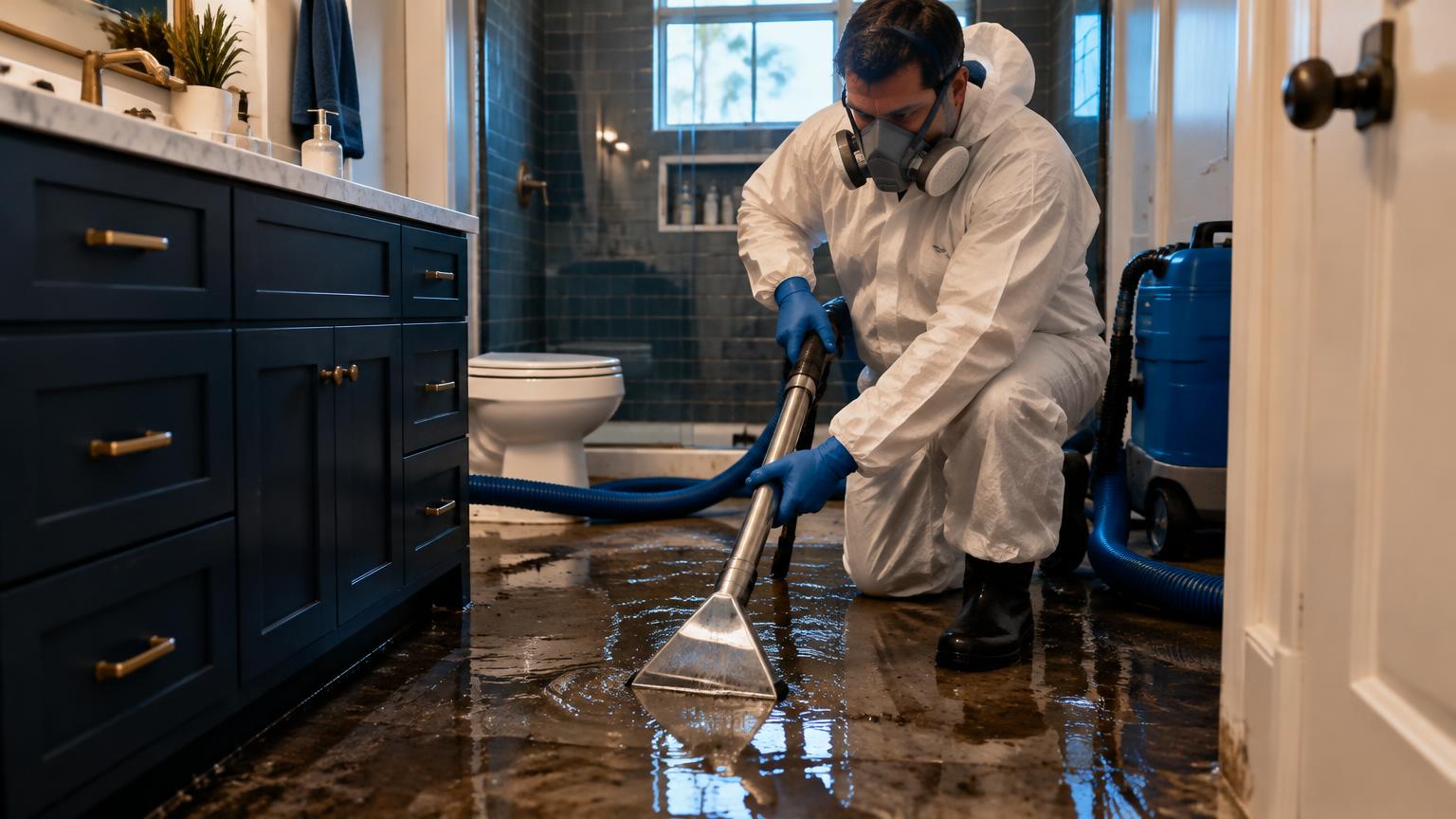
Technicians arrive in protective equipment and isolate the affected area so contamination does not spread to clean rooms. This is the same controlled approach used in mold remediation — containment first, removal second.
2. Extraction and Removal
Contaminated water is extracted with professional equipment, and porous materials that cannot be disinfected — saturated carpet, pad, drywall, insulation — are removed and disposed of safely.
3. Cleaning and Disinfection
Remaining surfaces are cleaned and treated with appropriate disinfectants. This step is what separates biohazard cleanup from ordinary water extraction — the goal is a sanitary space, not just a dry one.
4. Drying and Restoration
Industrial air movers and dehumidifiers dry the structure before rebuilding begins. Closing up walls too early traps moisture and invites mold growth, so drying is verified before repairs. All Clear handles the job from extraction through reconstruction with one team.
Common Causes of Sewage Backups on the Emerald Coast
- Blocked or aging sewer laterals, often from tree root intrusion
- Heavy rain overwhelming municipal or septic systems during storm season
- Septic system failures in rural Walton County properties
- Grease, wipes, and debris clogging interior drain lines
Whatever the cause, the cleanup standard is the same: treat it as a biohazard from the first minute.
Get Biohazard-Safe Sewage Cleanup in Freeport
If sewage has entered your home, do not wait and do not attempt cleanup yourself. Call 850-502-0494 for All Clear's 24/7 live response, or visit our restoration blog for more guidance on water, fire, mold, and sewage emergencies. Insurance coverage for sewage backups depends on your policy and the cause of loss — we can help document the damage for your claim.
Need help right now? We answer 24/7.
Free estimates for water, fire, mold, and sewage damage across Freeport and the Emerald Coast.